
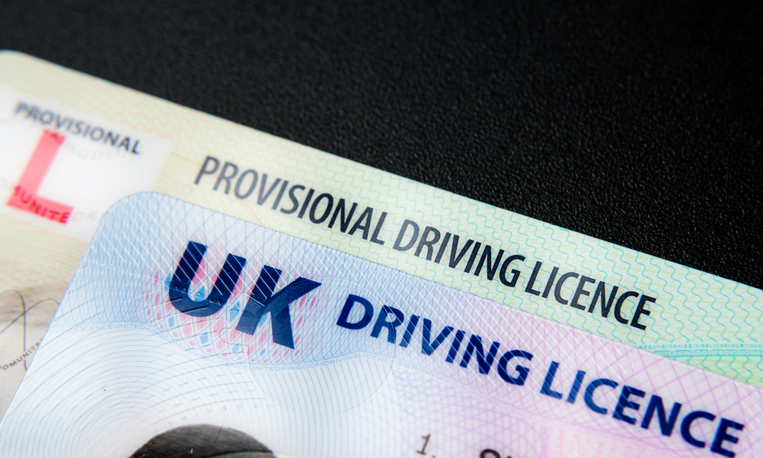
Northern Ireland is set to become the first part of the UK to introduce a Graduated Driver Licensing (GDL) scheme, with new rules coming into force from 1 October 2026.
The changes represent the biggest shake-up to driver licensing and testing in Northern Ireland for almost 70 years and are designed to give learner and newly qualified drivers more experience before they drive independently.
So, who will the new rules affect, and could we eventually see something similar introduced across the rest of the UK?
What is a graduated driving licence?
Graduated Driver Licensing is a system designed to introduce driving privileges gradually, rather than allowing a new driver unrestricted access to the roads as soon as they pass their test.
From 1 October 2026, learner drivers in Northern Ireland will have to complete a minimum six-month learning period before they can take their practical driving test.
During this time, learners will work through a structured Programme of Training, with their progress recorded in a logbook. For car drivers, this includes 14 mandatory modules covering areas such as hazard awareness, night-time driving, adverse weather, speed awareness and driver distraction. There is also an optional motorway-driving module.
The idea is to give learners experience of a wider range of driving situations before they are able to drive independently.
What are the new rules for learner drivers?
Under the new GDL system, learners will need to complete the six-month minimum learning period as well as the required training programme and logbook before taking their practical test.
This means someone won’t be able to apply for their provisional licence, quickly complete a series of intensive lessons and take their test within a matter of weeks.
Instead, learning will take place over a longer period, with the aim of helping drivers gain experience in different conditions and situations.
Learners will also be able to undertake motorway training with an Approved Driving Instructor as an optional part of the programme.
What happens after you pass your driving test?
The changes don’t end when a learner passes their test.
Newly qualified drivers under the GDL scheme will have to display an R plate for two years, rather than the current 12 months.
For the first six months after passing, drivers will display a blue ‘R’ on a white background. For the remaining 18 months, this changes to a white ‘R’ on a blue background.
Unlike the existing restricted-driver system, GDL will not impose a 45mph speed restriction on newly qualified drivers.
There will, however, be additional passenger restrictions for younger drivers during their first six months on the road.
Are there restrictions on young passengers?
Yes. For the first six months after passing their test, newly qualified drivers under the age of 24 will generally be allowed to carry no more than one passenger aged between 14 and 20 between 11pm and 6am.
There are exceptions. The restrictions don’t apply to immediate family members, and they won’t apply where an eligible supervising driver is sitting in the front passenger seat. That person must be at least 21 and have held a full driving licence for at least three years.
Importantly, this isn’t a blanket ban on young drivers driving at night. The restriction relates to carrying certain young passengers during these hours.
Why is Northern Ireland introducing graduated driving licences?
The main aim is road safety.
According to official Northern Ireland figures, drivers aged between 17 and 23 accounted for 24% of fatal or serious-injury collisions in 2024 where a driver was deemed responsible, despite this age group holding just 8% of driving licences.
Northern Ireland’s Department for Infrastructure says young drivers are also over-represented in night-time collisions, while carrying young passengers can increase the risks associated with late-night driving.
GDL schemes are already used in various forms elsewhere in the world, including Australia, New Zealand, the United States and the Republic of Ireland.
By introducing restrictions gradually and increasing the amount of supervised experience learners receive, Northern Ireland hopes to reduce the number of serious collisions involving inexperienced drivers.
Who will the new rules affect?
The new system will apply to learners whose provisional entitlement to drive a car or motorcycle begins on or after 1 October 2026.
There will be a transitional period for people who are already learning to drive.
If your provisional car licence entitlement started before 1 October 2026, you’ll be able to continue under the existing system and take the current practical test up to and including 31 March 2027.
If you haven’t passed by then, you’ll need to meet the new GDL requirements from 1 April 2027.
So, if you’ve already passed your test before the changes come into effect, the new rules won’t suddenly be applied retrospectively.
What happens if you break the new rules?
The new requirements aren’t simply recommendations.
Failing to display the correct R plate during the two-year new-driver period could result in a fine of up to £1,000 and three penalty points.
Breaking the passenger restrictions during the first six months could also result in a fine of up to £1,000 and three penalty points.
That’s particularly significant for new drivers because Northern Ireland’s existing two-year probationary rules mean a licence can be revoked if a new driver accumulates six or more penalty points during that period.
Could graduated driving licences come to the rest of the UK?
For now, the Northern Ireland scheme only applies in Northern Ireland.
However, the way young and inexperienced drivers learn is also being looked at elsewhere in the UK.
The UK Government has been consulting on introducing a minimum learning period for learner drivers in England, Scotland and Wales, which would mean learners spending longer gaining experience before being able to take their practical test.
However, the Government has said it is not currently considering the same post-test restrictions being introduced in Northern Ireland, such as restrictions on carrying passengers or driving at night.
So, while Northern Ireland’s full GDL scheme isn’t currently planned for the rest of the UK, part of its approach — particularly a minimum learning period — could eventually become familiar to learner drivers elsewhere.
Northern Ireland will therefore be an interesting test case. If the changes lead to fewer collisions involving young and newly qualified drivers, the debate around how the rest of the UK approaches learning to drive is unlikely to disappear.
Could GDL make young driver insurance cheaper?
Young drivers typically pay more for car insurance because insurers consider a range of risk factors, including age and driving experience.
The Northern Ireland Government says evidence suggests graduated licensing can reduce collision risk, which could potentially contribute to lower premiums for young drivers over time.
However, there’s no guarantee that the introduction of GDL will automatically make an individual driver’s insurance cheaper.
Insurers set their own premiums and consider numerous factors when calculating a quote, including your age, address, car, driving history and experience.
Whether you’re a learner preparing to take your test or you’ve recently passed, it’s still worth comparing young driver car insurance from a range of providers to see what’s available.
Need Insurance? Compare car insurance now