
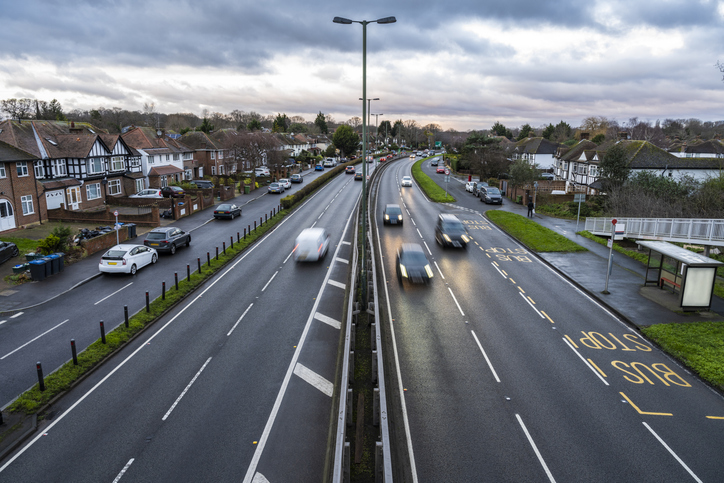
Change is coming to our roads, as the government is planning a major shake-up of road safety strategy. Around 1,600 people are killed on the roads in Great Britain each year, and nearly 30,000 killed or seriously injured. The government has set itself a goal to reduce the overall figure by 65% among the whole population, and to reduce the same statistic among children under 16 by 70%, all by 2035.
In early 2026, the government sketched out how it plans to do this, with several suggestions that could impact you and how you drive.
Drink driving and other road offences
As many as one in six deaths on the road in 2023 involved drink driving, so it is perhaps no surprise that this is an area that the government is looking at as it aims to bring down road casualties. The drink drive limit in England and Wales has remained unchanged since 1967 and is now the highest in Europe.
However, it is lower in Scotland with Northern Ireland set to also reduce its limits. The limit in England and Wales is currently 80mg per 100ml of blood, while in Scotland it is 50mg per 100ml. Some countries in Europe, such as Hungary, Romania and Slovakia among others, have a zero-tolerance approach while many other limits are lower than Scotland’s.
The government could take a varied approach to the new limit, too, with a different level for drivers with more or less experience behind the wheel. This could mean that those who have passed their test in recent years will have a lower top limit for alcohol blood levels.
Newer drivers
Newer drivers could face more changes in other areas, too, with the government highlighting that drivers aged 17-24 are involved in 24% of fatal and serious collisions. This is despite them only making up 6% of licence holders. As things stand, there is a post-passing probation period of two years, when a driver has to retake their test if they get six penalty points for motoring offences.
To address this, the government is also looking at the pre-test period. It is proposing that there be a minimum learning period, allowing new drivers more time to develop skills with an instructor before they go through a test – this could be three or six months. Currently you could, theoretically, take your test on your 17th birthday. However, it could be that learners would have to undergo a minimum number of supervised driving hours before they take their test. They could also have to follow a set syllabus, with a range of driving conditions. And to show that this has happened, learners could have to keep a logbook to record their progress.
As the current probationary period applies to any new driver irrespective of age, it is likely that the same would apply to the new changes. This means that you would have to go through the same process whether you pass aged 17 or 70.
Older drivers
There are possible changes for older drivers, too. As things stand drivers have to renew their licence every three years when they pass 70 years old, and are only required to self-declare that they meet the required eyesight standards. However, this could change as drivers might have to take an official eyesight test to renew their licence. This could require them to show that they can read a numberplate at the necessary distance, or that their eyes are sufficient for driving in darker conditions.
There are no precise details on how often the tests would have to be, nor is there a decision on who would carry out the tests.
Safety on the road
The strategy is also looking to make it a requirement for new cars to fit a wider array of safety systems. This is less likely to have a direct impact on people buying a new car in the UK, though, as manufacturers are already fitting many of these systems already. Think Automatic Emergency Braking (AEB) that detects vehicles, pedestrians and cyclists, Lane Departure Warning and Lane Keep Assist Emergency Stop Signal systems that flash warnings if the car decelerates rapidly.
Given one in three road deaths involve someone driving or riding for work, the proposals are also looking at creating a national standard for employers. It will also look at reforming motorcycle training and investigate trials for improving safety for bikers on rural roads.
With potential changes affecting new drivers, experienced motorists and even vehicle requirements, now could also be a good time to review your car insurance. Making sure you have the right level of cover is essential particularly if new rules alter how, when or how often you drive. Through Mustard.co.uk, you can compare car insurance from some of the UK’s leading providers in minutes, helping you find cover that suits your needs and budget without the hassle of shopping around individually.
It’s important to note that all these proposals are just that – all these are subject to a public consultation. That means that you can have your say before they become law. The consultations are all available on the government’s website.